
10-Lesson Financial Reset (Beginner Friendly)
Feeling overwhelmed by money stress? You’re not alone. Whether you’ve made financial mistakes in the past or you’re simply ready for a fresh start, a financial reset gives you the chance to rebuild your confidence with simple, practical steps. This 10-lesson guide breaks down everything you need to know—no complicated jargon, no judgment, just clear actions you can start today.
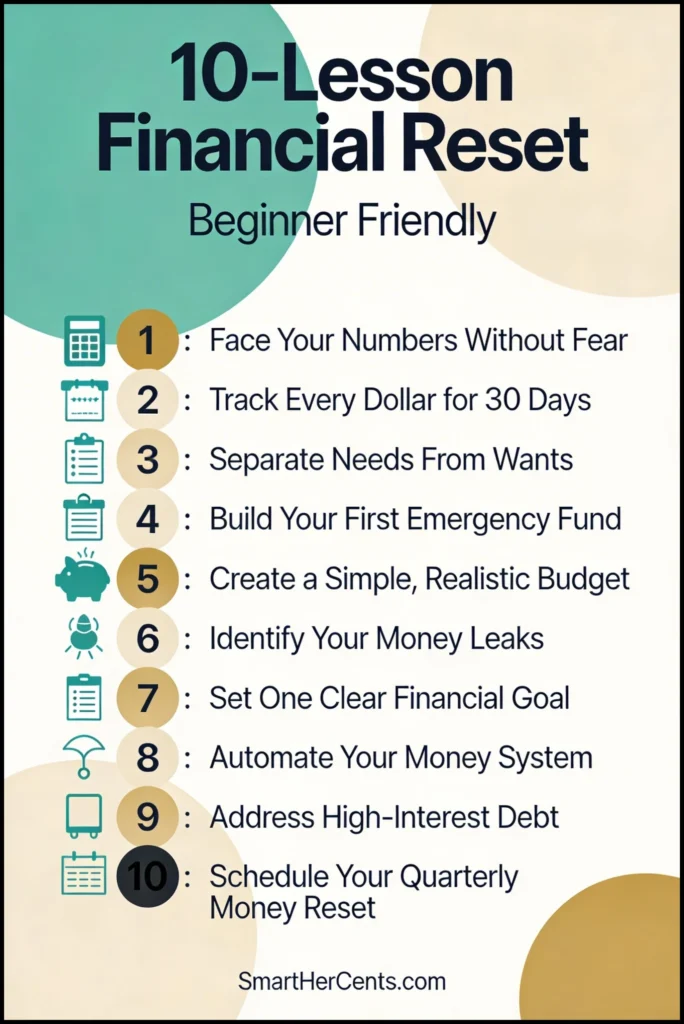
Why This Financial Reset Works
A financial reset isn’t about perfection—it’s about creating systems that work for your real life. Most money problems aren’t about willpower; they’re about having the right habits and tools in place. This gentle approach helps you:
- Build confidence with small, manageable wins
- Reduce money-related stress and anxiety
- Create sustainable habits that fit your lifestyle
- Feel in control of your finances without overwhelm
Lesson 1: Face Your Numbers Without Fear
The first step in any financial reset is understanding where you actually stand. Many people avoid looking at their bank accounts because of shame or fear, but facing your numbers is the foundation of positive change.
What to do: Spend one afternoon gathering all your financial information—bank statements, credit card balances, bills, and income sources. Write down your total monthly income and your total monthly expenses. This isn’t about judgment; it’s about clarity. Once you know your starting point, you can create a realistic plan that actually works.
Lesson 2: Track Every Dollar for 30 Days
You can’t manage what you don’t measure. Tracking your spending reveals patterns you might not notice otherwise—like that $6 daily coffee that adds up to $180 a month, or forgotten subscriptions draining your account.
What to do: For the next 30 days, write down every single purchase, no matter how small. Use a notebook, a budgeting app, or a simple spreadsheet. This exercise isn’t about restricting yourself; it’s about awareness. After 30 days, you’ll have clear data about where your money actually goes, making the next steps much easier.
Lesson 3: Separate Needs From Wants
One of the biggest beginner mistakes is treating wants like needs. Understanding the difference helps you make intentional spending decisions without feeling deprived.
What to do: Review your tracked expenses and label each item as a “need” (essentials like rent, utilities, groceries, insurance) or a “want” (dining out, entertainment, new clothes). This doesn’t mean you can’t enjoy wants—it means you’re making conscious choices about them. When money is tight, this clarity helps you prioritize without stress.
Lesson 4: Build Your First Emergency Fund
Life happens—car repairs, medical bills, unexpected expenses. Having even a small emergency fund prevents these surprises from derailing your entire financial plan.
What to do: Start with one achievable goal: save $500-$1,000 for emergencies. This isn’t your full emergency fund (that comes later), but it’s enough to handle most small crises without using credit cards. Set up an automatic transfer of $25-$50 per paycheck into a separate savings account. Small, consistent moves build momentum without requiring daily willpower.
Lesson 5: Create a Simple, Realistic Budget
Complicated budgets fail because they’re too rigid for real life. A beginner-friendly budget should be flexible, forgiving, and easy to maintain.
What to do: Try the 50/30/20 rule as a starting framework: 50% of income for needs, 30% for wants, and 20% for savings and debt. If those percentages don’t fit your situation, adjust them—even saving 10% is a win when you’re starting out. The key is creating a system you can actually stick with, not one that looks perfect on paper but fails in practice.
Lesson 6: Identify Your Money Leaks
Money leaks are small, often forgotten expenses that drain your budget without providing real value. Subscription services, unused memberships, and convenience purchases add up quickly.
What to do: Review your tracked expenses and highlight recurring charges you rarely use. Cancel subscriptions you forgot about or don’t need. Look for cheaper alternatives to regular purchases—like brewing coffee at home instead of daily café visits. These small changes can save $100-$300 per month without major lifestyle sacrifices.
Lesson 7: Set One Clear Financial Goal
A budget without a goal is just a list of numbers. Having one specific, achievable target gives your financial reset purpose and motivation.
What to do: Choose one financial goal for the next 90 days. This could be paying off one credit card, saving $500, or consistently tracking expenses for three months. Make it specific, measurable, and realistic for your current situation. Breaking big goals into smaller milestones makes them less overwhelming and more achievable.
Lesson 8: Automate Your Money System
The best financial systems run themselves. Automation removes the need for daily decision-making and willpower, making it easier to stay on track.
What to do: Set up automatic transfers for savings on payday, before you have a chance to spend the money. Automate bill payments to avoid late fees. Schedule weekly 10-minute money check-ins to review transactions and catch overspending early. These simple systems create consistency without constant effort.
Lesson 9: Address High-Interest Debt
High-interest debt—especially credit cards—can keep you stuck in a financial cycle that’s hard to break. Tackling it strategically reduces stress and frees up money for other goals.
What to do: List all your debts with their interest rates and minimum payments. Focus extra payments on the highest-interest debt first (debt avalanche method) or the smallest balance first (debt snowball method). Even an extra $20-$50 per month makes a difference over time. If you’re overwhelmed, prioritize making minimum payments while building your emergency fund—both are important.
Lesson 10: Schedule Your Quarterly Money Reset
Financial planning isn’t a one-time event—it’s an ongoing practice. Regular check-ins help you adjust your plan as your life changes and celebrate progress along the way.
What to do: Put a reminder in your calendar for the first day of each quarter (January, April, July, October). Spend 30-60 minutes reviewing your budget, tracking your progress toward goals, and adjusting your plan if needed. This habit keeps your financial system running smoothly and helps you stay motivated throughout the year.

Your Next Steps
Financial confidence isn’t built overnight—it’s built through small, consistent actions that add up over time. You don’t need to implement all 10 lessons at once. Start with one or two that feel most urgent for your situation, and build from there.
Remember: this journey is about progress, not perfection. Every small win—tracking expenses for a week, saving your first $50, canceling one unused subscription—moves you closer to the financial confidence you deserve. You’ve got this.